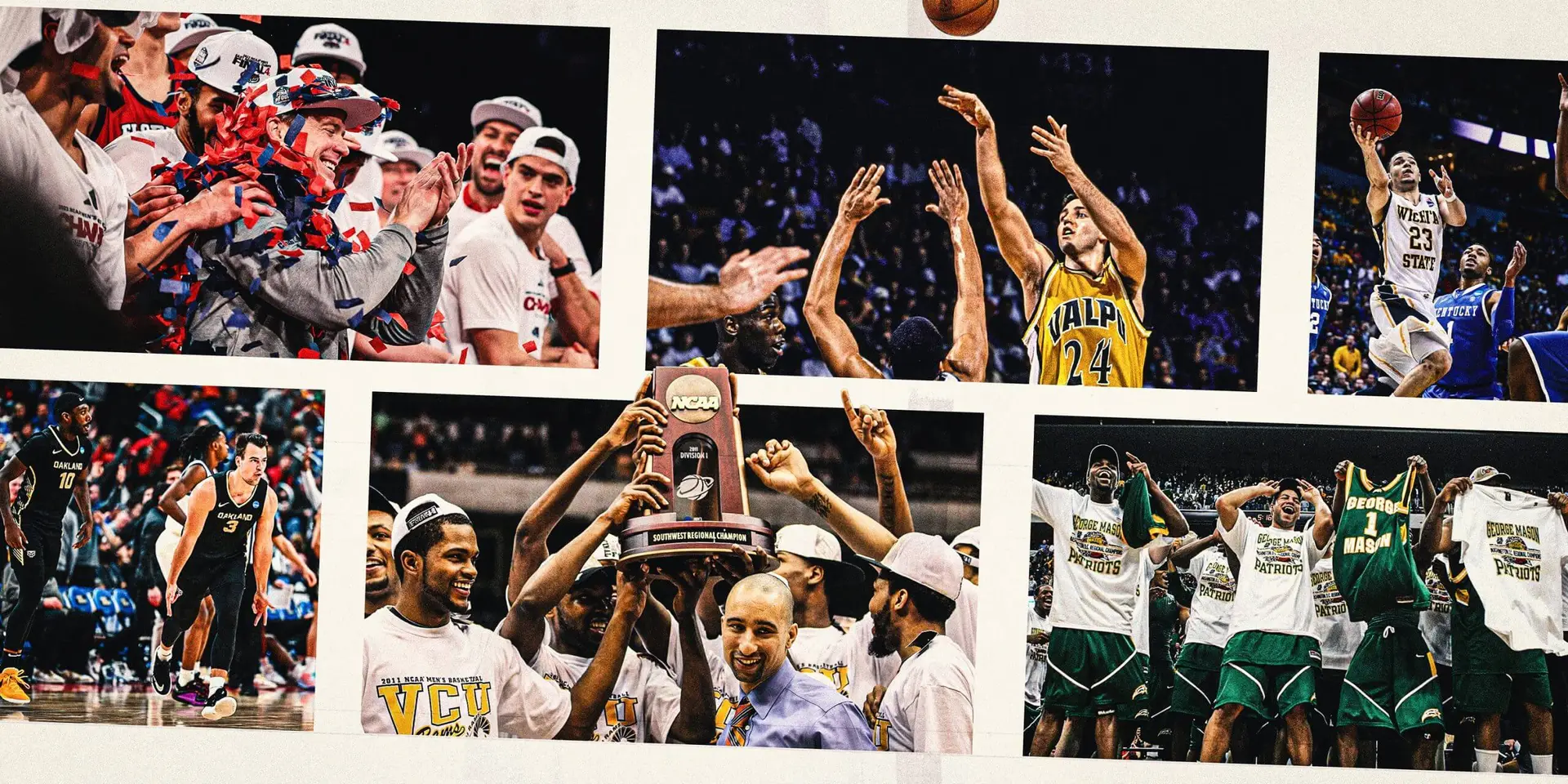
The biggest story of the 2025 Men’s NCAA Tournament was the lack of raw, nationwide bracket-busting Cinderella stories, but could a flip be switched this year?
With the 2026 NCAA Men’s Basketball Tournament just days away from officially tipping off and fans begin to fill out their brackets, an annual attention-grabber is the debate of who will write their underdog story and prove the country wrong. Ever since Name, Image, and Likeness (NIL) and the transfer portal took control of the game, it became an almost impossible challenge for mid-major schools to make deep postseason runs. But in the end, there have been more upsets in the past several seasons prior to 2025 than almost any stretch in the history of March Madness.
Though it’s possible for changes to the sport’s landscape to cut down on long term Cinderella runs, it’s still too early to write off big upsets as a short-lived memory from the past. With this, in no particular order, who are some of the top contenders to live out the magic slipper moment that all underdogs desire to accomplish?
- Miami (Ohio) (Midwest Region, No. 11 Seed)
These rankings would not be the same without the RedHawks after their perfect regular season. They ran hot in close games and embraced their soft schedule, despite ending their undefeated streak on March 12 against UMass in the MAC tournament quarterfinals. The team will begin its quest in the First Four against SMU on Wednesday, March 18, hoping to play its way into the main draw against Tennessee on Friday.
As this year’s Cinderella, the strongest case skill level on the offensive end. Forwards Brant Byers and Almar Atlason are major matchup problems that pull defenders away from the rim and open up the floor for drives from star guard Peter Suder. The RedHawks shoot elite percentages from both two and three, rarely turn the ball over, and get to the line at a high clip. To an extent, they’ll need to outscore teams in this tournament to advance, but Miami has the juice on that end of the floor to get hot.
Even with the natural flaws, this is not a team to want to see in a close game late. Until the loss to UMass, Miami’s biggest strength had been how clutch they had been in end-of-game situations. Suder in particular has pulled through in clutch moments, so don’t be surprised to see some from prime time plays from him this week.
2. VCU (South Region, No. 11 Seed)
After beginning the season with an 11-6 record, the Rams won 16 of 17 games down the stretch to skyrocket into tournament conversations and continue to intimidate opponents as the season got deeper.
The key factors to the team’s improvement are sophomore guards Terrence Hill Jr. and Brandon Jennings. Hill is a high-level scorer who efficiently generates scores, while Jennings is a defensive powerhouse who can change games in an instant. In addition, Lazar Djokovic and a group of big wings create versatility across the defensive end.
With VCU facing off against No. 6 seed North Carolina (South Region), their guards are more favorable over the Tar Heels, who have been inconsistent all throughout the season. The battle the Rams likely wouldn’t be able to solve would have been with potentially top-five NBA draft pick Caleb Wilson, but he has been out for the season due to a broken thumb. VCU has physicality on their side to pull off a first round upset, and it wouldn’t be a surprise if they scare Illinois as well.
3. Santa Clara (Midwest Region, No. 10 Seed)
30 years since their last trip to the Big Dance, the Broncos are back dancing again under head coach Herb Sendek with 20-plus wins per year in the last six seasons. As any classic Cinderella story goes, this team has been battle-tested for ages, having played three power-conference opponents and a total of 13 games against top-100 KenPom programs.
When looking at the talent, Santa Clara has more than just the necessary tools to make a strong run. When freshman forward Allen Graves comes off the bench, he catches the eyes of the NBA with his playing style emulating Duke’s Cameron Boozer. Also, guards Christian Hammond and Sash Gavalyugov are all big names, and 7-footer Bukky Oboye can change games as a key shot blocker. The Broncos were the WCC’s most efficient offense this season and have plenty of firepower to keep pace with Kentucky, who will be their first round opponent.
A potential concern to keep in mind when defending Santa Clara as a Cinderella is its poor free throw balance. At the line, the Broncos have one of the 10 lowest rates in the country while fouling at a high rate, a result of their aggressive defense that looks to force turnovers. The team has enough depth needed to deal with foul trouble, but sending teams to the free throw line over 20 times per game is a costly choice, especially against a Kentucky team that had one of the highest free throw rates in the SEC.
4. Northern Iowa (East Region, No. 12 Seed)
This isn’t the Panthers’ first trip as a Cinderella, having gone to the Sweet 16 in 2010 and winning tournament games in the tournament in 2015 and 2016. In a rare fashion for a mid-major, Northern Iowa retained its head coach from all of those runs. Ben Jacobson has a legacy as one one of the best coaches outside the power conferences and is just three wins from his 400th with the program.
In this season’s Missouri Valley tournament, the Panthers racked up a No. 6 seed and were successful against St. Louis, trailing for a grand total of 34 seconds in four games. However, they declined in the January standings when power forward Tristan Smith missed time with an injury, losing six of eight games, before climbing back up in February and March. As a whole, Northern Iowa is more than 16 points per 100 possessions better with Smith on the floor than off, serving as an offensive catalyst who brings the pieces together with his physical attacks of the basket. When star guard Trey Campbell gets added into the mix and a plethora of wing sharpshooters, the bucket-getting capabilities generate an offense that speaks more than what statistics show.
Northern Iowa fits the profile of a team built for making positive chaos in March. It plays one of the slowest tempos in the country, limiting possessions and making it difficult to go on the type of game-changing runs. It has a talented roster, returning all 11 players with eligibility remaining from last season.
In conclusion, the Panthers didn’t get many favors playing in the first round against St. John’s, who are winners of 19 of 20 games including a 20-point win over UConn in the Big East title game. If this squad can control the pace, they could be set up for a real chance. A win there could pit them against Kansas State in a rematch of an iconic game from the 2010 NCAA tournament.
5. Saint Louis (Midwest Region, No. 9 Seed)
A hopeful pitch for this team’s Cinderella story is their shooting. As a team, the Billikens shoot 40.5% from deep, which puts them second in the nation, and does so on high volume. Four players shoot 40% or better from deep, including Xavier transfer Trey Green’s 47% for his 90 makes. Having a big man in Robbie Avila that can pass with many elite shooters around him puts incredible pressure on the defense, and athletic cutters like Dion Brown, Kellen Thames and Amari McCottry take advantage of that elite spacing.
This isn’t the biggest team for the tournament, but Saint Louis has shown consistency when it comes to protecting the paint and forcing teams to settle for tough threes on the perimeter. With their depth, Josh Schertz has the ability to tailor lineups to various games. He can play bigger with Paul Otieno at center, smaller with more versatile wings, or lean more into shooting with Ishan Sharma and Brady Dunlap off the bench.
After going 24–1, they had a head-scratching loss to Rhode Island and got blown away by Dayton and George Mason before losing a heartbreaker to Dayton in the A-10 tournament. Is this an example of a team that peaked too early? The late losses left Saint Louis in a difficult seeding position. After a manageable first game against Georgia, the Billikens would take on Michigan in the second round. Of the No. 1 seeds, that’s likely the best matchup possible for them given their ability to pull the tall players away from the rim, but it’s still a demanding order.
For this year’s March Madness, the odds of fans filling out a perfect bracket are one in a billion. But with this stacked list of Cinderella teams, each round will be a “never say never” type of moment where every win can be loud for the nation.